Scratches on hardwood floors can make an otherwise beautiful room look worn and neglected. Furniture movement, pet claws, shoes, and everyday foot traffic can all leave visible marks. Fortunately, not every scratch requires sanding or professional refinishing.
Knowing how to repair scratches on hardwood floors starts with identifying the depth of the damage and the type of finish protecting the wood. Light surface marks may disappear with a suitable touch-up product, while deeper scratches need wood filler, colour matching, or professional attention.
This guide explains practical hardwood scratch repair methods, the products to use, and ways to prevent future damage.
How to Identify Different Types of Hardwood Floor Scratches
Before attempting scratch in hardwood floor repair, inspect the damaged area under good lighting. Run your fingernail gently across the scratch. If it does not catch, the damage may only affect the protective finish. If it catches or reveals lighter-coloured wood, the scratch is likely deeper.
| Scratch type | What it looks like | Recommended repair |
| Surface scratches | Light marks or hazy lines | Cleaning or touch-up product |
| Moderate scratches | Visible lines that catch slightly | Repair wax or filler |
| Deep scratches | Exposed wood or missing fibres | Wood filler or professional repair |
| Nicks and gouges | Noticeable dents or missing wood | Filler or refinishing |
Understanding the difference helps you choose the right method for how to repair hardwood floor scratches instead of sanding areas that only need minor attention.
How to Repair Scratches on Hardwood Floors Using DIY Methods:
Learn simple DIY techniques to clean, treat, and repair hardwood floor scratches using suitable touch-up products, repair wax, and wood fillers without unnecessary sanding.
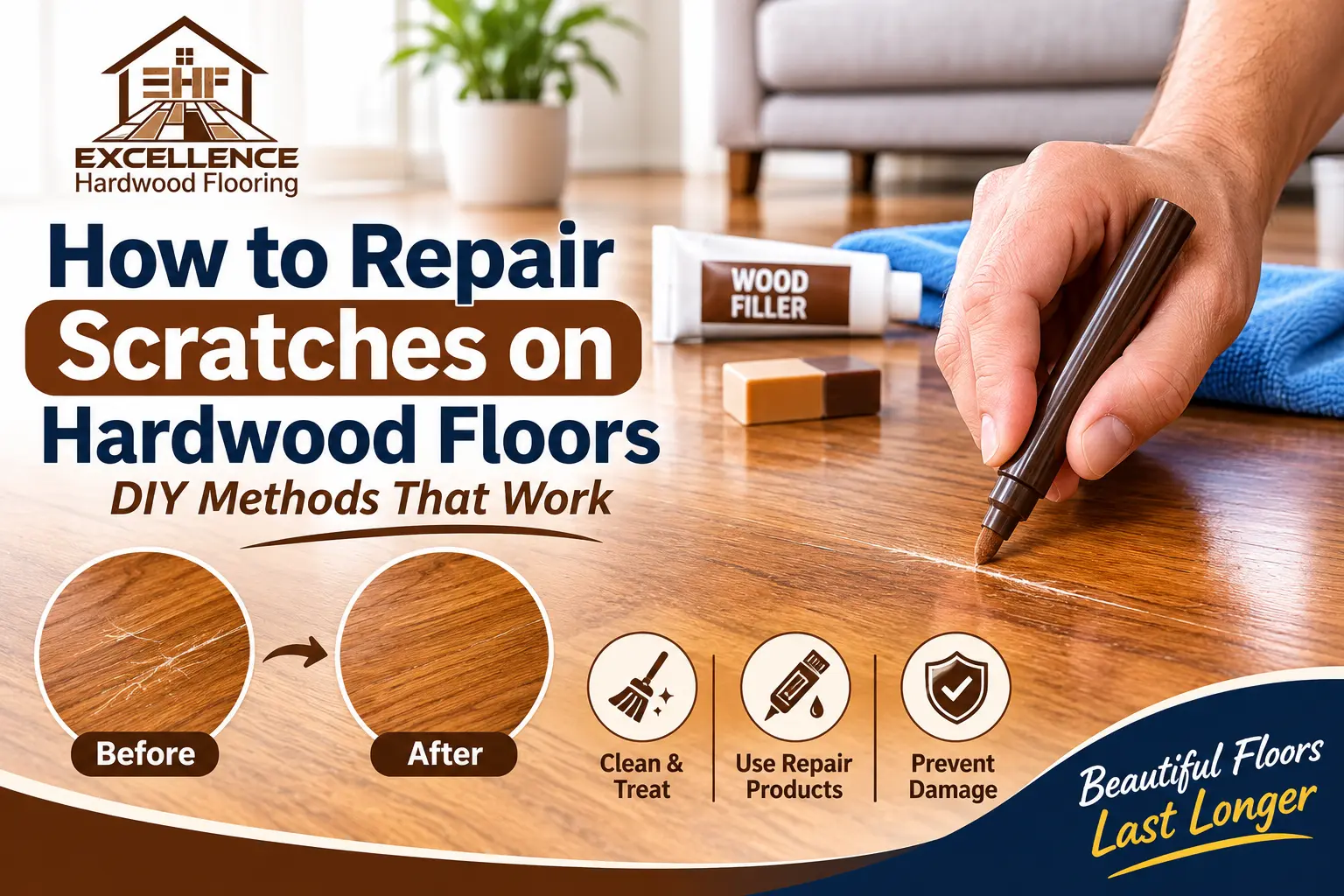
1. Clean and Treat Light Surface Scratches
Light scratches usually affect the protective finish rather than the wood itself. Start by removing dust and dirt with a microfiber cloth or vacuum fitted with a hardwood floor attachment.
Next, apply a manufacturer-approved hardwood floor cleaner. Once the surface is dry, use a compatible touch-up marker that matches your floor colour.
Wipe away excess colour with a clean cloth and allow the product to dry according to its instructions.
This method can help you how to fix scratches on wood floor surfaces without sanding. A suitable hardwood scratch remover may also disguise minor marks, although it cannot replace missing wood or restore a damaged protective coating.
2. How to Fix Nicks in Hardwood Floor Surfaces
Deeper scratches, small dents, and gouges require more attention. If you are researching how to fix nicks in hardwood floor, colour-matched repair wax or hardwood filler may provide a suitable solution.
Follow these steps:
- Clean the damaged area and remove loose debris.
- Select a repair product designed for hardwood flooring.
- Match its colour to the existing wood as closely as possible.
- Apply a small amount according to the manufacturer’s instructions.
- Remove excess material and allow it to set.
- Apply a compatible touch-up finish if required.
Avoid ordinary wall filler or unsuitable wood putty. These products may create visible patches that do not match the floor’s natural grain.
For larger gouges or missing wood fibres, professional hardwood floor scratch repair may provide a more consistent result.
3. How to Buff Out Scratches on Hardwood Floors
Buffing can improve the appearance of minor scratches when the existing finish remains intact. However, it cannot repair deep damage or replace missing wood.
For light wear across a larger area, a flooring professional may use screening to lightly abrade the existing finish before applying a compatible new coat. This process can help how to buff out scratches on hardwood floors without removing the entire finish.
Avoid using steel wool or coarse abrasive pads because they can damage the protective coating. Similarly, vinegar and olive oil do not provide reliable wooden floor scratch remover results. They cannot restore damaged wood or replace a worn finish.
Can You Repair Scratches on Engineered Hardwood?
Yes, but the repair options depend on the thickness of its real wood surface layer. Engineered hardwood has a genuine wood veneer attached to multiple supporting layers.
Minor marks can often be treated with compatible touch-up products. However, deep sanding may remove too much of the top wood layer.
Before attempting how to repair wood floor scratches on engineered flooring, check the manufacturer’s maintenance instructions, identify the finish, and confirm whether the floor can be refinished.
Unlike solid hardwood, engineered flooring cannot always be sanded multiple times. Its refinishing potential depends on the thickness of the top wood layer.
For homeowners considering new flooring, choosing suitable residential hardwood flooring can also help ensure the floor meets their household’s maintenance needs.
When Should You Hire a Hardwood Flooring Professional?
DIY repairs work best for isolated, shallow scratches. Consider professional assistance when:
- Scratches expose large areas of bare wood.
- Multiple boards have deep gouges.
- The existing finish is peeling or worn away.
- Previous touch-up attempts have created uneven patches.
- The floor needs sanding, staining, or refinishing.
A professional can determine whether localized repairs, screening and recoating, or complete refinishing will deliver the best result.
Homeowners looking for hardwood floor repair Etobicoke, hardwood floor repair Toronto, or hardwood floor repair GTA should choose an experienced flooring contractor who can assess the existing wood and finish.
You can also explore hardwood flooring in Toronto to learn more about available flooring options and view our recent projects for examples of completed flooring work.
How to Prevent Scratches on Hardwood Floors
Preventing damage is easier than repeatedly repairing scratches. Follow these simple maintenance practices:
- Use furniture pads: Attach felt protectors beneath chairs, tables, and sofa legs.
- Trim pet nails: Regular grooming helps reduce scratches caused by dogs and cats.
- Remove dirt regularly: Sand and small stones can act like abrasives under shoes.
- Place entrance mats: Catch debris before it reaches your hardwood floors.
- Lift furniture: Avoid dragging heavy objects across the surface.
- Use suitable cleaning products: Follow the manufacturer’s recommendations and avoid excessive moisture.
Regular maintenance also helps preserve the protective finish. For more guidance, see our upcoming guide on how to clean hardwood floors.
Frequently Asked Questions
Can you fix scratches on hardwood floors without sanding?
Yes. Minor scratches can often be improved using hardwood touch-up markers, compatible repair wax, or manufacturer-approved maintenance products. Deeper damage may require sanding or refinishing.
How do you know if a scratch needs sanding or refinishing?
If the scratch only affects the protective coating, a touch-up or maintenance coat may be sufficient. Scratches that expose bare wood, create deep grooves, or affect multiple boards may require sanding and refinishing.
Does vinegar and olive oil fix hardwood scratches?
No. This mixture does not repair damaged wood or restore the original finish. Use products specifically designed for your floor instead.
How much does hardwood floor scratch repair cost?
The cost depends on the number of damaged boards, scratch depth, flooring type, and whether the job requires localized repair or complete refinishing. Request a professional assessment for an accurate estimate.
Restore the Appearance of Your Hardwood Floors
Knowing how to repair scratches on hardwood floors can help you handle minor damage before it becomes more noticeable. Start by identifying the scratch depth, cleaning the area, and choosing a repair product that matches your floor’s finish.
For deeper damage or widespread wear, professional refinishing may provide a more consistent and lasting result. If your floors need expert attention, request a quote to discuss the right repair or refinishing solution for your home.