
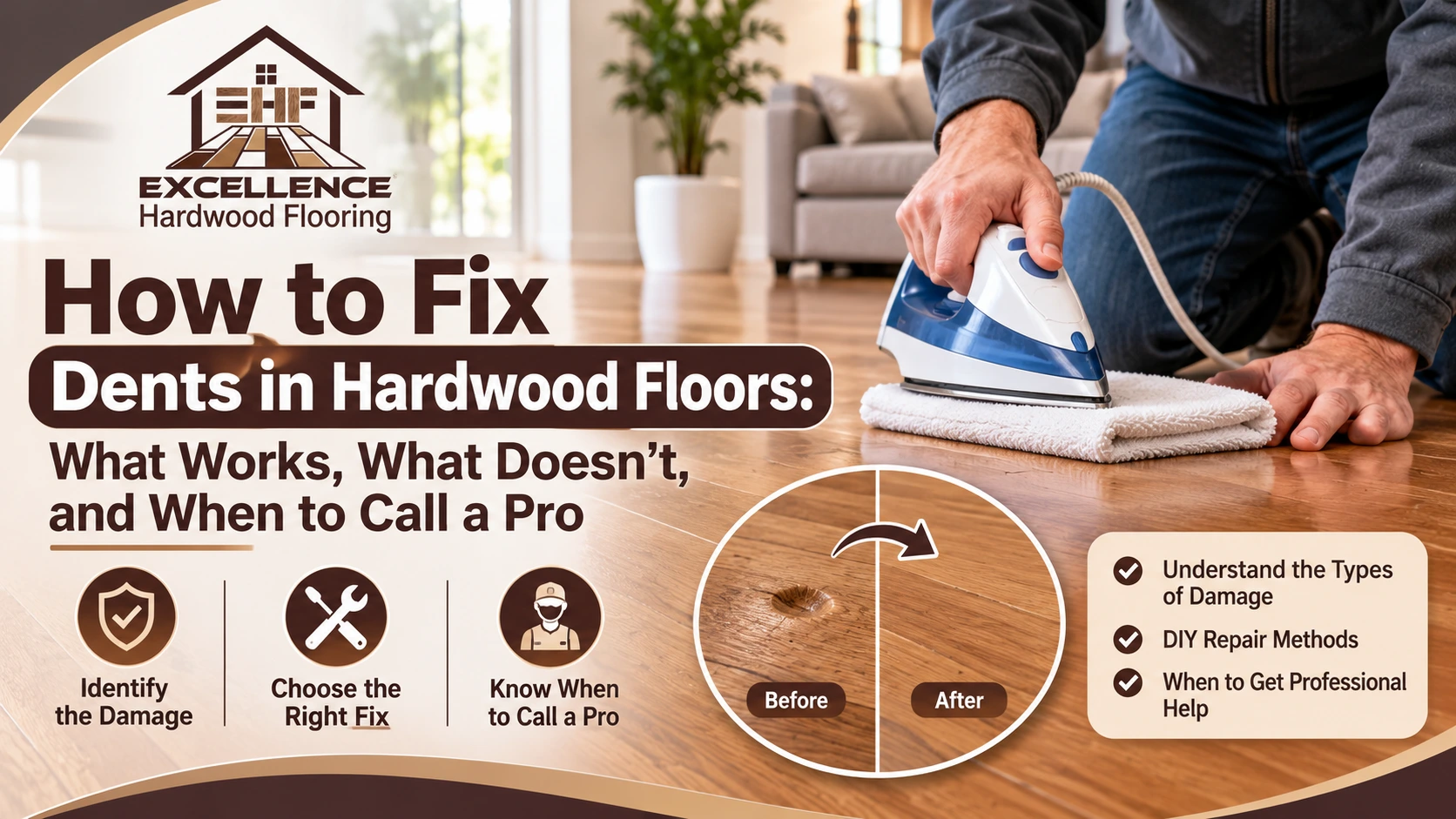
Hardwood floors add warmth, character and value to a home, but everyday activities can leave behind dents, scratches and deeper marks. Dropped objects, moving furniture, pet claws and heavy foot traffic can all damage a wood floor’s surface. While some minor damage can be addressed with careful DIY methods, other problems require professional attention.
Understanding the type of damage is the first step towards choosing the right repair. This guide explains how to fix dents in hardwood floors, which methods are suitable for different floor types, when DIY repairs may cause more harm, and when professional help is the better option.
Whether you are dealing with minor wood floor dents or more noticeable damage, knowing what works can help you protect your flooring.
Understanding the Difference Between Dents, Nicks, Gouges and Scratches
Before attempting any repair, identify what has actually happened to the wood. These terms describe different types of damage and require different approaches.
- Dent: A dent occurs when wood fibres are compressed by pressure or impact. The material is pushed inward but generally remains intact. This is the type of damage that may respond to controlled moisture and heat.
- Nick or gouge: A nick is a small cut or chip, while a gouge is a deeper area where wood material has been torn away or removed. Missing material cannot simply be restored with steam.
- Scratch: A scratch usually affects the protective finish rather than compressing or removing the wood itself. Deeper scratches may also expose the bare timber.
Understanding whether you have a dent in hardwood floor or damage to its protective coating helps prevent the wrong repair technique from making the problem worse.
How Do You Fix a Dent in a Wood Floor?
You can sometimes reduce a shallow dent in unfinished or suitable solid hardwood by allowing compressed fibres to absorb a small amount of moisture. A damp cloth and carefully controlled heat may encourage the fibres to expand. However, this technique is not suitable for every floor. Always check the manufacturer’s instructions, protect the finish and test an inconspicuous area first.
Choosing the Right Repair Method for Your Floor
There is no single solution for every type of floor damage. The correct approach depends on the depth of the damage, the floor’s construction and the condition of its finish.
| Damage type | Floor condition | Suitable approach |
| Shallow dent | Unfinished solid hardwood | Carefully controlled moisture and heat may help |
| Shallow dent | Finished solid hardwood | Check finish compatibility before attempting moisture-based treatment |
| Dent | Engineered hardwood | Manufacturer-approved repair or professional assessment |
| Small nick | Minor missing wood | Compatible wood filler or professional touch-up |
| Deep gouge | Significant missing material | Filling, board repair or replacement |
| Surface scratch | Finish affected only | Compatible finish touch-up or refinishing |
| Widespread damage | Multiple affected boards | Professional assessment and possible refinishing |
This table provides general guidance, not a guarantee of results. Prefinished and engineered flooring can have specific maintenance requirements.
Does the Iron and Damp Cloth Trick Work on Hardwood?
The iron and damp cloth method can sometimes reduce dents in suitable unfinished solid hardwood because moisture and controlled heat encourage compressed wood fibres to expand. However, it will not replace missing wood or repair damaged finishes. Using too much moisture or heat can cause staining, raised grain, finish damage or further deterioration.
How to Fix a Dent in Wood Floor Using Moisture and Heat
If your floor is confirmed suitable for this method, follow these precautions:
- Clean the damaged area: Remove dust and dirt using a soft cloth. Make sure the surface is clean before attempting any repair.
- Check the finish: Confirm whether the floor has a protective coating. Do not apply heat or moisture without checking the manufacturer’s care instructions.
- Test an inconspicuous spot: Try the proposed method somewhere hidden first to check for discolouration, finish changes or other unwanted effects.
- Protect the surrounding surface: Use a clean, lightly damp cloth as a barrier. Never apply an iron directly to hardwood.
- Use minimal heat and moisture: Avoid prolonged exposure, excessive steam or soaking the timber. Monitor the surface carefully.
- Allow the area to dry: Check for changes in colour, texture or finish before considering any additional treatment.
Stop immediately if the finish changes, the wood darkens or the surface begins to swell.
Can You Fix Dents in Hardwood Floors?
Yes, some dents in hardwood floors can be improved, particularly shallow dents where the wood fibres remain intact. However, success depends on the wood species, floor construction, protective coating and depth of the damage. Deep gouges, torn fibres and cracked finishes generally require filling, refinishing or professional repair rather than steaming.
How to Fix Nicks in Hardwood Floor
Unlike dents, nicks involve a small amount of wood being chipped, cut or removed. Since the missing material cannot expand back into place, moisture and heat are generally ineffective.
For minor nicks, a compatible wood filler may help restore the appearance of the damaged area.
Consider these steps:
- Remove loose debris around the nick without enlarging the damaged area.
- Choose a filler compatible with the wood species and existing floor finish.
- Apply the filler according to its manufacturer’s instructions.
- Allow it to cure before carefully blending and finishing the repaired area.
- Check the colour and sheen against the surrounding flooring.
For deeper nicks, visible chips or damage in prominent areas, professional repair can help achieve a more consistent appearance.
What DIY Dent Repair Cannot Fix
It is equally important to understand when a repair method will not work. Not all dent wood damage is reversible, and repeatedly applying heat or moisture can make the situation worse.
DIY steaming is unlikely to resolve:
- Torn wood fibres: Once fibres are broken, they cannot return to their original condition through steaming.
- Deep gouges: Missing timber needs filling, patching or replacement.
- Damaged finishes: Steam cannot restore cracked, peeling or worn protective coatings.
- Severe compression: Deep dents may remain visible even after appropriate treatment.
- Engineered flooring damage: Thin real-wood wear layers can be particularly vulnerable to excessive moisture and heat.
Wet wood can also develop raised grain, staining or cupping. These risks are especially important with engineered floors, where moisture may affect the layered construction.
Steel wool should generally be avoided unless the existing finish and manufacturer’s maintenance guidance specifically allow it. It can scratch surfaces, leave metal particles and cause problems with certain water-based finishes.
When Should You Call a Hardwood Flooring Professional?
Some damage is better handled by an experienced flooring professional, particularly when the affected area is large or the repair involves the protective finish.
Consider professional assistance if:
- You have deep gouges or significant missing wood.
- The protective finish is cracked, peeling or extensively damaged.
- Boards show cupping, swelling or signs of water damage.
- Multiple dents appear across several rooms.
- Damage is located in a high-traffic area where an uneven repair will remain noticeable.
- You have engineered flooring and are unsure which repair methods are safe.
Depending on the condition of the floor, professional solutions may include localised repairs, filling, refinishing or replacing individual boards.
If the damage extends beyond the surface or affects several boards, replacement may be more appropriate than repeatedly attempting small repairs. A professional assessment can help determine whether repairing the existing flooring is practical or whether new residential hardwood flooring is worth considering.
Professional Hardwood Floor Dent Repair in Etobicoke and the GTA
DIY methods can be useful for minor damage, but achieving a consistent finish across hardwood flooring requires an understanding of wood construction, surface preparation and finishing techniques.
Professional assessment is particularly valuable when dents, scratches and gouges affect the appearance of a larger area. Choosing the right repair approach can help preserve the existing floor and avoid unnecessary replacement.
For homeowners looking for hardwood floor repair Etobicoke or hardwood floor repair Toronto, the condition of the existing flooring should guide the recommended solution. Repairing isolated damage and restoring a worn surface are different tasks, and each requires an appropriate approach.
If your floors need more extensive restoration, explore professional hardwood floor refinishing options. You can also learn more about hardwood flooring in Etobicoke and hardwood flooring in Toronto.
To understand the difference professional workmanship can make, browse our projects for examples of completed flooring work and before-and-after results.
Restore the Appearance of Your Hardwood Floors
Not every dent needs professional attention, but not every dent can be fixed with a household iron either. Identifying the damage correctly, understanding your floor’s construction and following the manufacturer’s care instructions are essential before attempting a repair.
If you are unsure how serious the damage is, a professional assessment can help you avoid unnecessary repairs and protect your investment. For homeowners seeking hardwood floor refinishing Etobicoke, an experienced hardwood floor repair contractor can help determine the most suitable solution for the existing surface.
Contact the team to discuss your flooring concerns and request a free estimate. With the right repair approach, you can make an informed decision about restoring your hardwood floors.